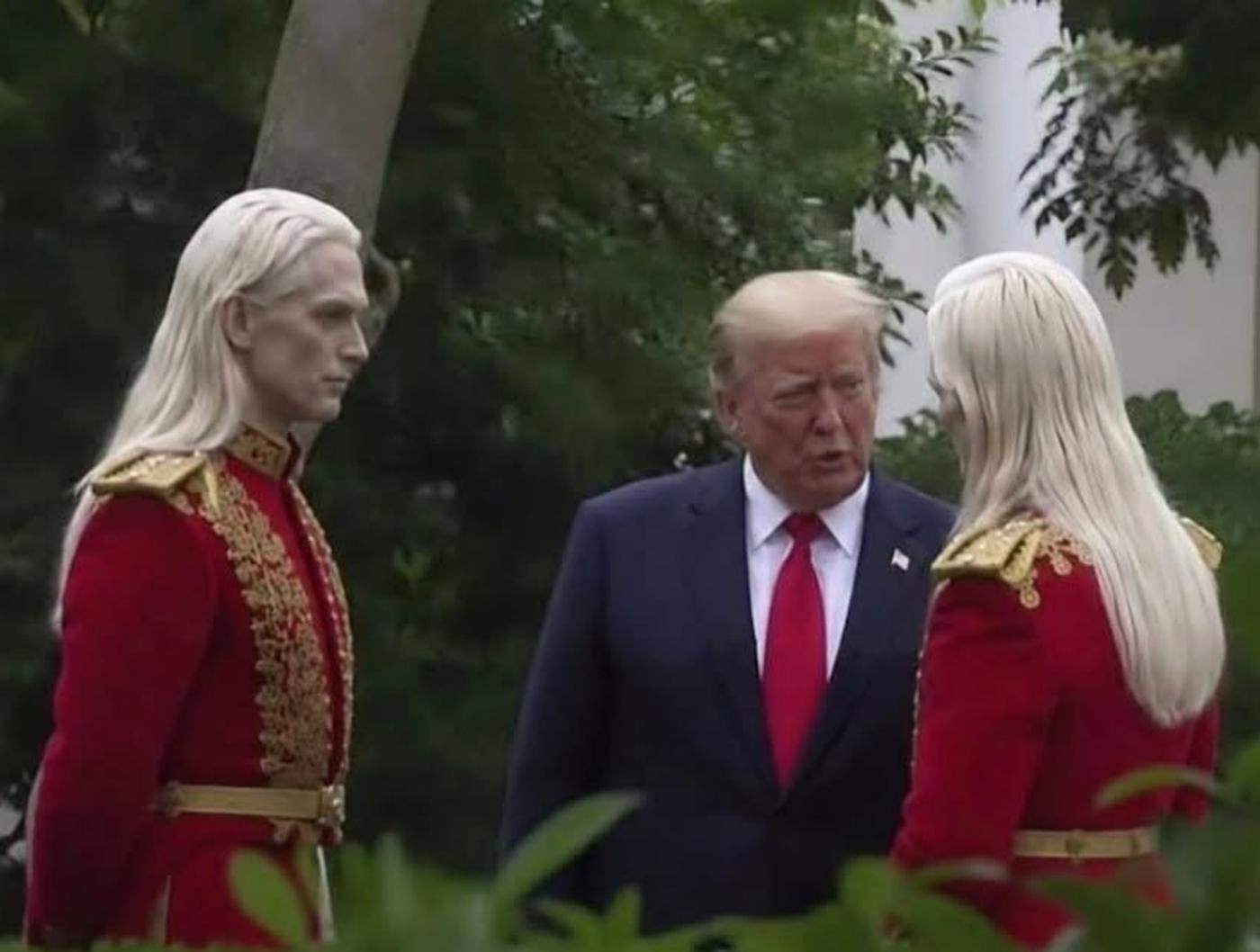
Observers were careful not to overstate what they saw. This was not a moment of visible weakness. It was something more subtle and arguably more revealing: acknowledgment of consequence. Decisions once framed as bold or disruptive had moved fully into the record, no longer abstract or deferred. The future, which once served as a shield, had narrowed into the present. Accountability—legal, political, and historical—was no longer theoretical.
What unfolded during those thirty minutes was not a political performance but a human interval. Stripped of slogans and staging, Trump appeared less as a symbol and more as an individual navigating the narrowing distance between legacy and judgment.